
 Modified shipping containers are today used for a wide variety of purposes. Insulating a shipping container is essential for keeping warm during the winter and cool during the summer months. How these shipping containers are insulated, though, depends on two factors:
- The climate in which the containers are going to be placed
- How these containers are going to be used
Let us take a look at the importance of insulating your shipping container.
Why Insulate Your Shipping Container?
Proper insulation improves the energy efficiency of any structure. With the correct type and thickness of insulation, you can drastically decrease the amount of time your air conditioner or heating systems are running, thus reducing your power consumption and as a result, your utility bill.
The steel walls of a steel shipping container tend to get extremely hot in the summer and equally as cold in the winter. The type and amount of insulation required depends on the climate and function of the container. Without proper insulation, it can become very uncomfortable to stay in a shipping container if the container is used as an office or workshop. Even if the container is used for storage, temperature control may be required depending on what will be stored inside.
Furthermore, insulating a shipping container also helps improve the acoustics inside. Because of the hollowed shape of any shipping container, there is an echo created upon making any sound. Proper insulation inside a shipping container can dramatically reduce any noise problems.
Types of Insulation
Styrofoam, spray foam, and batt are the three main types of insulation used in shipping containers. Let us look at each of them:
Styrofoam: Polystyrene (commonly known as Styrofoam) is ideal for insulating storage containers. It is a fast, easy, and cost-effective way of insulating a storage shipping container and also helps reduce sound. Conventional climate-controlled storage containers typically cone with an inch of Styrofoam insulation already installed.
Spray Foam: This is ideal for temperature-sensitive enclosures. It is not considered to be the most aesthetically pleasing insulation, and it is sprayed directly onto the container walls. The spray foam then sets as a water-resistant, hard covering. Spray foam is a more expensive insulation option.
Batt (or Roll): This insulation material is ideal for living spaces and offices. Batt is made up of finely woven strands of mineral wool, plastic fibers, or glass, and it is the industry standard for insulation used in residential and office containers.
The quickest way to insulate shipping containers is to put in insulation panels that are readily available in predefined sizes, making it easy to fit them. Blanket insulation is also considered to be one of the cheapest options available. Eco-friendly insulation materials are also available such as cotton, wool, and mud.
So when you are buying a shipping container, keep in mind the various insulation options there are as only with proper insulation can you successfully convert a container into a comfortable living or office space.
For more information on modifying a shipping container contact Carolina Containers at 919-562-9187.

 Shipping containers are the lifeblood of many construction sites given their superior versatility. Today, these containers can be found inside warehouses, shipping docks, schools, and even in the backyards of DIYers all around the world! But just how versatile can
  Shipping containers used to be all about transporting cargo. Now they are used in a wide variety of situations. People have used them for everything, from storage to office buildings. After all of the recent natural disasters, a conversation has begun about using
 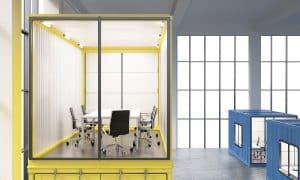 When searching for a temporary mobile office, there are two options available: office trailers and
  A secure and lockable shed is almost a must-have for any backyard today, if you have any kind of landscaping business you know you need secure storage for your work tools, if they go missing so does your income. In this case, a shipping container that is not only heavy-duty built to withstand a lifetime of work on land and sea, but it can also extremely secure and customizable, and can be modified to make the perfect equipment storage shed. A shipping container storage unit is a far more cost-effective option than regular garden sheds on the market today, and the good thing is you can choose between a 10ft, 20ft, or 40ft container with the choice of standard height 8.6ft high or high cube 9.6ft high. With that much space, you should be covered for the foreseeable future!
 Shipping containers make durable and robust building material to be used in constructing homes or storage units compared to other eco-friendly building materials like straw bales or recycled plastics. As strong as these containers are, parts can get weaker and compromised over time. While general-purpose shipping containers such as the 20-foot and 40-foot, including standard height and high cube containers, are made from a copper chromium alloy and weather resistant material known as cor-ten steel, you still need to take the steps you can to keep it protected as much as you can. Redundancy is better than doing nothing to later learn it’s caused you some huge issues.
 More and more people are converting shipping containers into business or offices. Shipping containers portray a very modern and structural aesthetic and this is part of what makes them so attractive particularly to younger market demographics. It is also cheaper and easier to set up a mobile office using a shipping container in comparison to building one from scratch as long as you have sufficient land space. Here are several tips to help you set up your shipping container mobile office.
 Most reputable vendors typically provide their clients with customization options for their shipping container offices so that you can fit it to YOUR needs. The most popular are the windows, HVAC systems, general comfort. Conex shipping containers are still metallic all through, they can get warm when it’s hot outside. A window air conditioner is usually sufficient for an HVAC system but if you want to connect multiple shipping containers, you are better off with centralized air conditioning. Even toilets are an option.